
Does it heal by itself?
After an injury, one of the most common questions people ask is: “Will this heal on its own?”
The honest answer is: sometimes. It depends far more on what tissue is injured than how much it hurts.
Bone and muscle usually heal well. Tendons and ligaments heal slowly and often through scar tissue. Cartilage and labral tissue have very limited capacity to regenerate.
One crucial point many people miss: pain often settles before the tissue is fully healed. That gap is why re-injury is so common.
Why blood supply matters so much
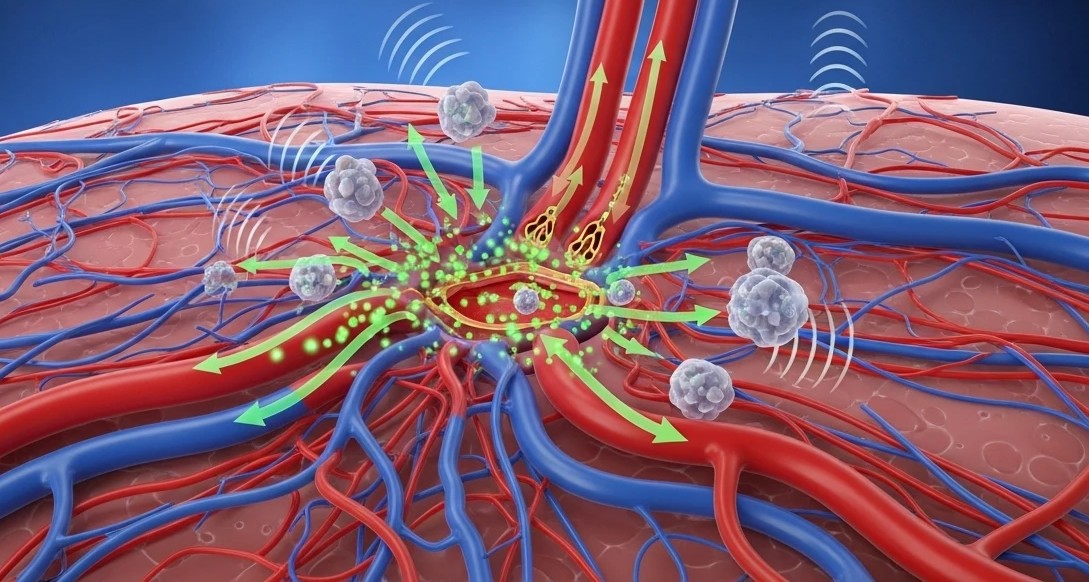
Healing requires oxygen, nutrients, immune cells, and chemical signals — all delivered by blood.
Tissues with good blood supply and regenerative cells heal efficiently. Poorly vascular tissues rely on slow diffusion, making recovery longer and often incomplete.
The three phases of tissue healing
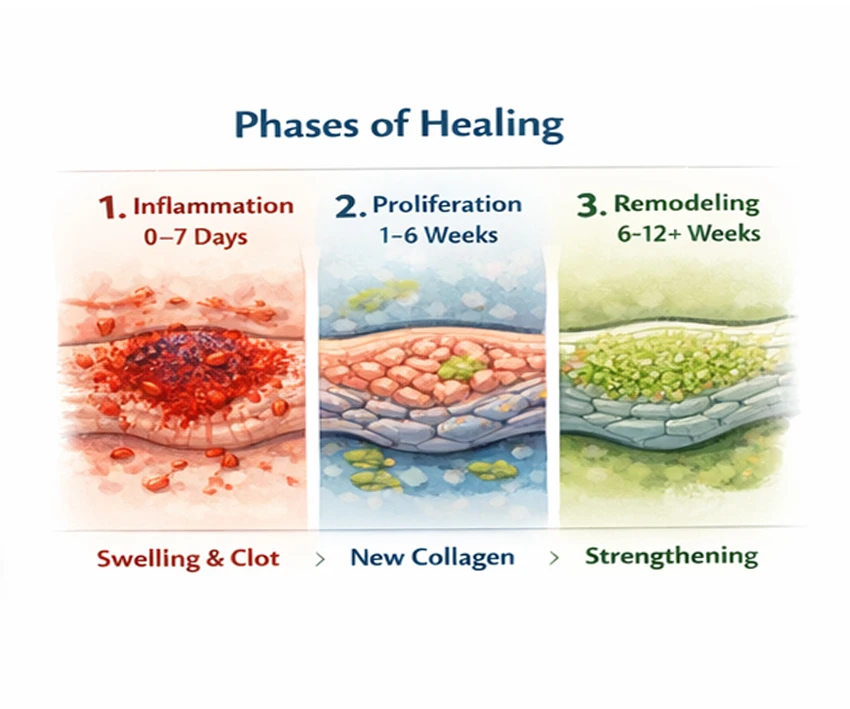
- Inflammatory phase (0–7 days): swelling, pain, cleanup
- Proliferative phase (1–6 weeks): new collagen formation
- Remodeling phase (6–12+ weeks): strengthening and adaptation
Complete rest beyond the early phase usually slows recovery. Most tissues need the right load at the right time.
Bone – designed to heal
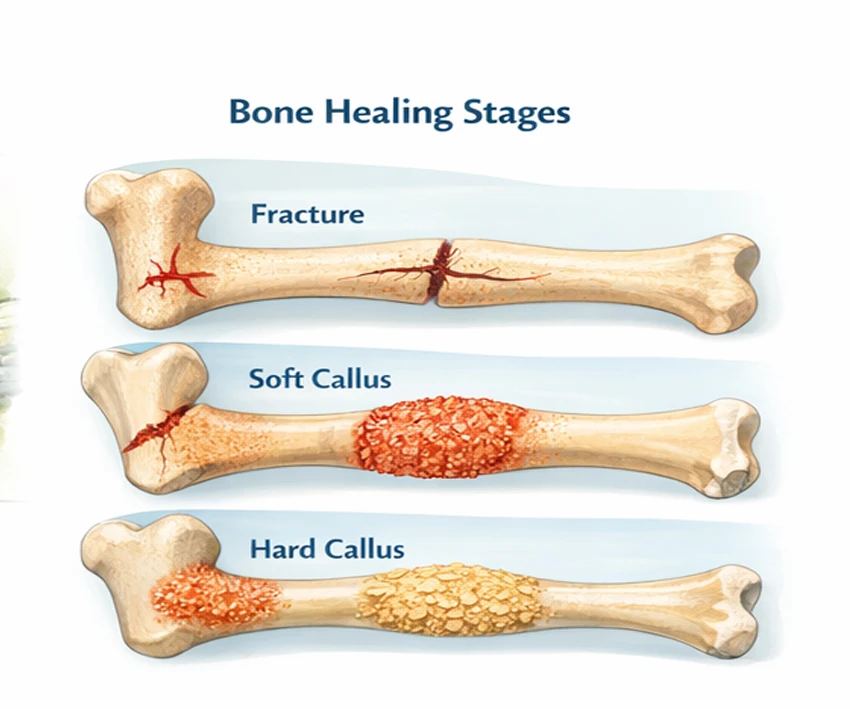
Bone is living tissue with excellent blood supply and specialised repair cells.
Most uncomplicated fractures heal within 6–12 weeks, with remodeling continuing for months.
Stability matters. Displaced or unstable fractures may require surgical fixation.
Muscle – fast and efficient repair
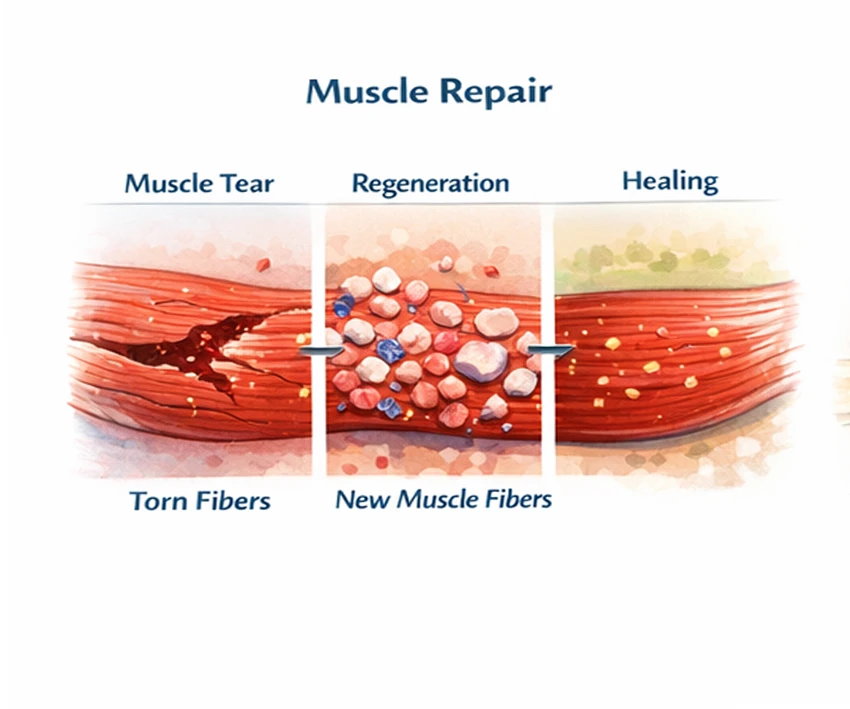
Muscle has rich blood supply and satellite cells that regenerate damaged fibres.
Minor strains may heal within days; larger tears can take weeks to months.
Prolonged rest weakens muscle — progressive loading restores strength.
Tendons – slow, scar-based healing
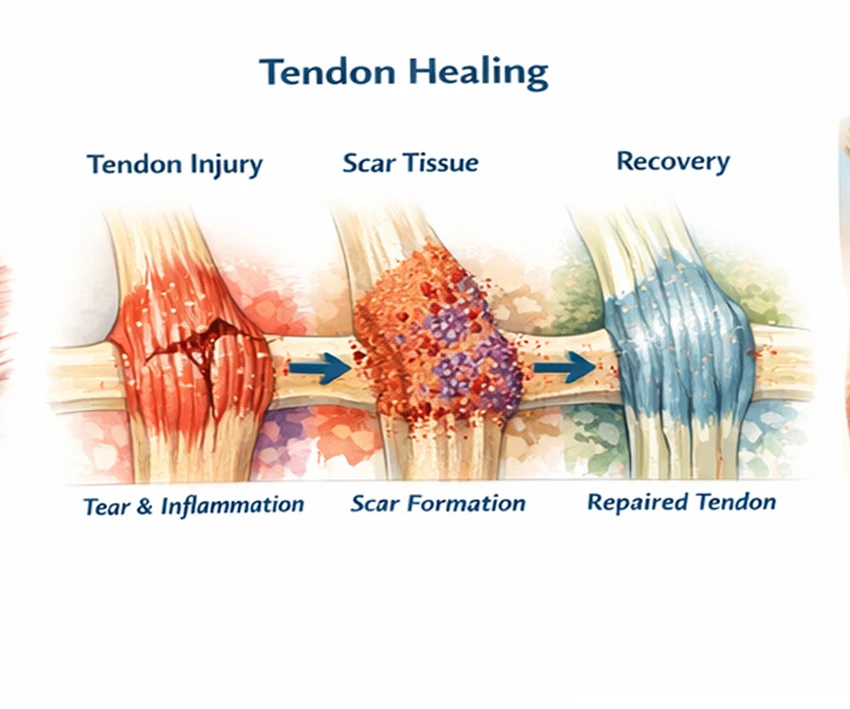
Tendons have a limited blood supply and low cellular turnover, which means they heal slowly and often through the formation of scar tissue rather than true regeneration.
Pain may persist even after early inflammation settles. Long-term recovery depends less on rest and more on gradual, progressive loading to restore strength and resilience.
Ligaments – healing depends on location
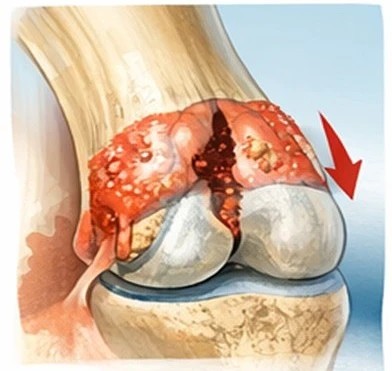
Ligaments stabilise joints and generally have a limited blood supply, which affects their ability to heal after injury.
Extra-articular ligaments
Outside the joint capsule – better healing potential
- Knee: MCL, LCL
- Ankle: ATFL, CFL, Deltoid ligament
- Elbow: UCL, RCL
Intra-articular ligaments
Inside the joint capsule – poorer healing potential
- Knee: ACL, PCL
- Hip: Ligamentum teres
- Wrist: Intercarpal ligaments
Labral tears – limited healing, common confusion
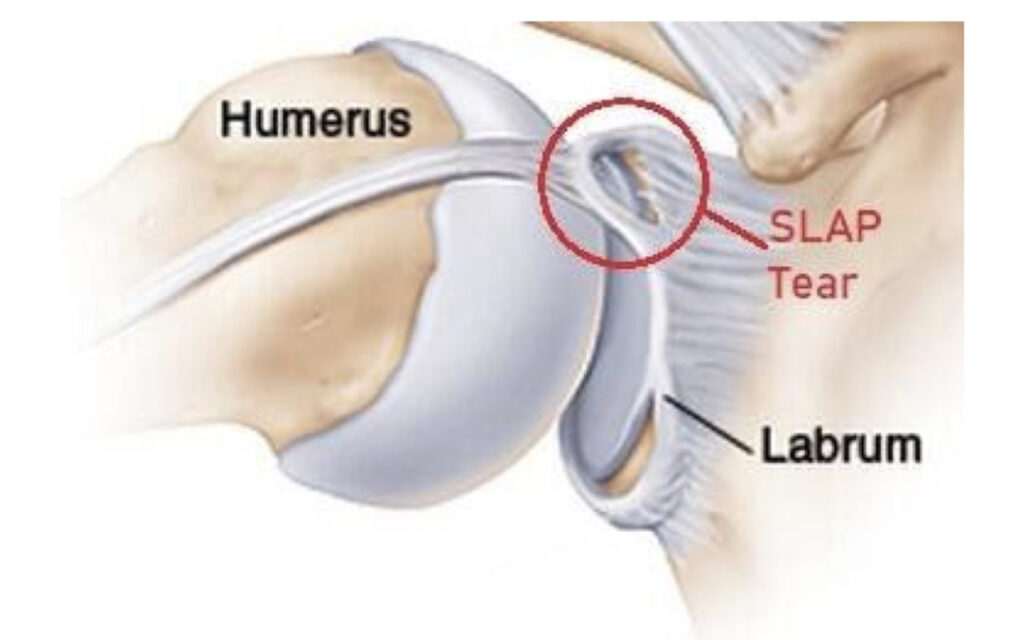
The labrum is a ring of fibrocartilage that deepens the shoulder and hip joints.
It has very limited blood supply, meaning most labral tears do not structurally heal.
Many people improve without surgery — not because the tear disappears, but because strength and joint control reduce stress on the labrum.
Cartilage – minimal self-repair
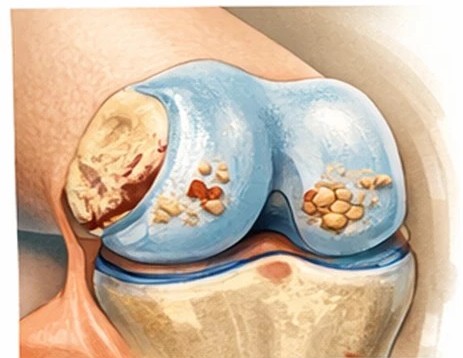
Articular cartilage is avascular and aneural, which severely restricts its regenerative capacity. Without a direct blood supply, healing relies on slow diffusion rather than true tissue repair.
Surgical or regenerative procedures may promote defect filling, but the resulting tissue is typically fibrocartilage, not native hyaline cartilage, and does not fully replicate the mechanical properties of normal joint cartilage.
FAQ
Does cartilage heal by itself?
In most cases, no. Cartilage has minimal blood supply and very limited regenerative capacity. Management focuses on load control and joint health.
Why does tendon pain last so long?
Tendons adapt slowly due to poor blood supply. Pain often reflects reduced capacity rather than active damage.
Can a labral tear heal without surgery?
The tissue rarely heals structurally, but many people become symptom-free with rehabilitation.
Why does pain improve before healing is complete?
Pain is influenced by inflammation and nervous system sensitivity, which often improve before tissue strength returns.
Should I rest completely until healing is finished?
Usually not. Most tissues heal better with controlled movement and progressive loading.
So… does it heal by itself?
Sometimes. Bone and muscle usually heal well. Tendons and ligaments heal slowly and often incompletely. Cartilage and labral tissue have limited self-repair.
If recovery isn’t trending better, or you’re unsure what tissue is involved, a physiotherapy assessment can prevent long-term issues.
AlphaCare Physio Insight
Healing isn’t about waiting — it’s about rebuilding capacity safely. The right load at the right time makes all the difference.